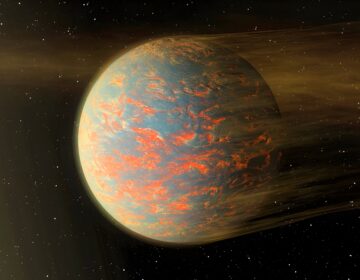
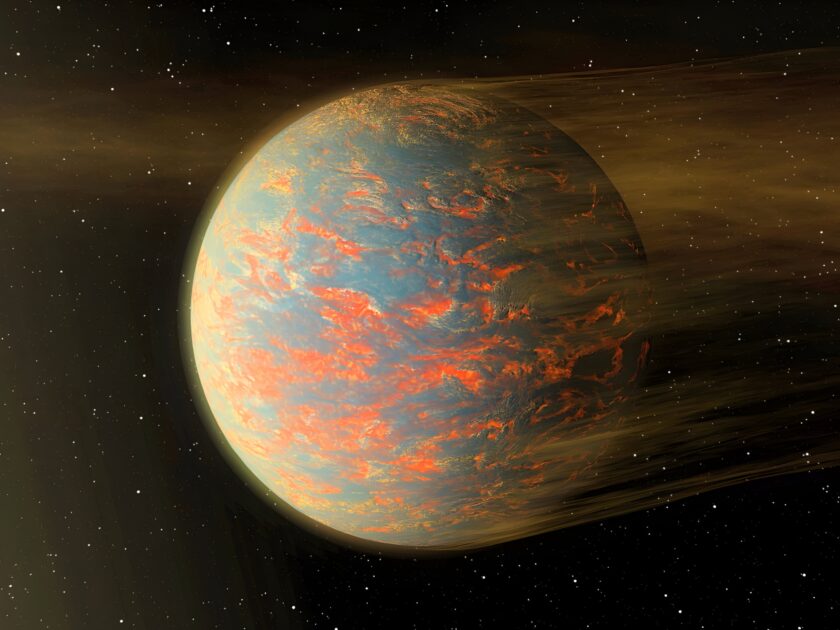
A distant planet might sit in the perfect orbit for life, with temperatures just right for liquid water. But if that world is too dry, it could still be completely uninhabitable. New research suggests that many so-called “desert planets” may be far less promising than they appear. But new research suggests many of these dry worlds are far less likely to support life than previously thought.
A study from the University of Washington finds that an Earth-sized planet needs a surprisingly large amount of water, at least 20 to 50% of Earth’s ocean volume, to maintain long-term surface habitability.
Astronomers have confirmed more than 6,000 exoplanets, with billions more expected to exist across the galaxy. Many fall within the habitable zone, where temperatures could allow liquid water. But being in the right location is only part of the story. A planet also needs stable climate controls, and those depend heavily on how water interacts with its geology and atmosphere.
“When you are searching for life in the broad landscape of the universe with limited resources, you have to filter out some planets,” said lead author Haskelle White-Gianella, a UW doctoral student of Earth and space sciences.
Water Alone Is Not Enough
While water is essential, it does not automatically make a planet habitable. In this study, researchers took a closer look at planets with only small amounts of water to better understand their potential for life.
“We were interested in arid planets with very limited surface water inventory — far less than one Earth ocean. Many of these planets are in the habitable zone of their star, but we weren’t sure if they could actually be habitable,” White-Gianella said.
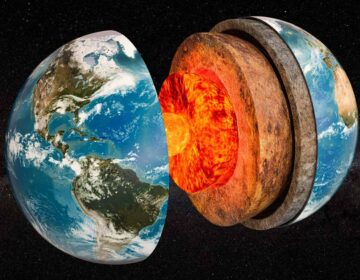
The findings, published in Planetary Science Journal, show that habitability depends on the geologic carbon cycle — a water-driven system that moves carbon between a planet’s atmosphere and interior over millions of years, helping regulate surface temperature.