NASA’s new AI-ready space chip could give future spacecraft a brain of their own.
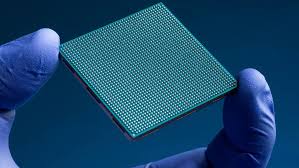
NASA is developing a powerful new computer chip that could dramatically change how future spacecraft operate in deep space. Created through a commercial partnership, the advanced processor is designed to give spacecraft the ability to process information far more quickly and even make certain decisions independently during missions far from Earth.
NASA’s Push for Smarter Spacecraft
The agency’s High Performance Spaceflight Computing project is focused on increasing the computing capabilities of spacecraft used for exploration missions. Current spacecraft rely on older processors because they are reliable and durable enough to survive the harsh conditions of space. However, those chips lack the performance needed for the next generation of missions.
NASA says more advanced processors are essential for developing autonomous spacecraft, speeding up scientific discoveries through faster onboard data analysis, and supporting astronauts during future missions to the Moon and Mars.
“Building on the legacy of previous space processors, this new multicore system is fault-tolerant, flexible, and extremely high-performing,” said Eugene Schwanbeck, program element manager in NASA’s Game Changing Development program at the agency’s Langley Research Center, in Hampton, Virginia. “NASA’s commitment to advancing spaceflight computing is a triumph of technical achievement and collaboration.”
Radiation Hardened Processor Under Extreme Testing
At the heart of the project is a radiation-hardened processor built to deliver up to 100 times more computing power than current spaceflight computers while surviving the severe conditions found in space. Engineers at NASA’s Jet Propulsion Laboratory (JPL) in Southern California have been conducting extensive tests to simulate those environments.
“We are putting these new chips through the wringer by carrying out radiation, thermal, and shock tests while also evaluating their performance through a rigorous functional test campaign,” said Jim Butler, High Performance Space Computing project manager at JPL.