Tiny galaxies orbiting the Milky Way may hold clues to one of cosmology’s biggest mysteries.
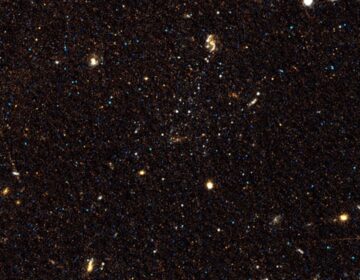
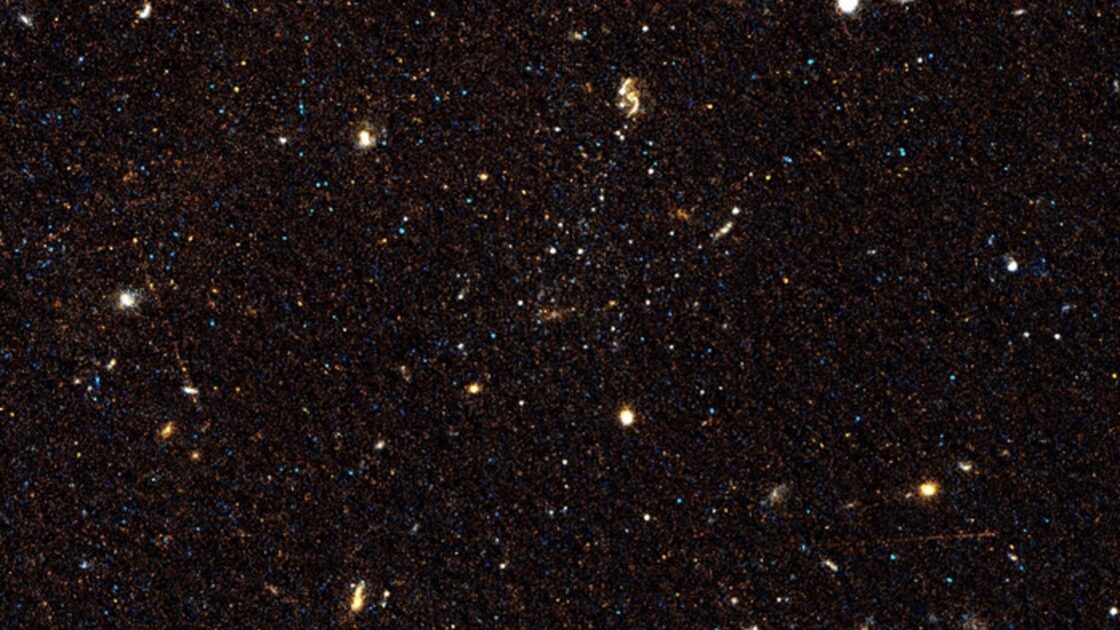
Ultra-faint dwarf galaxies are among the smallest known galaxies orbiting the Milky Way. Astronomers have long viewed them as ancient remnants from the early cosmos. Now, researchers at the Oskar Klein Centre and the LYRA collaboration have used a powerful new set of simulations to show that these dim galaxies may reveal how conditions in the young Universe shaped which galaxies were able to grow and which never formed stars at all.
The study, published in Monthly Notices of the Royal Astronomical Society (MNRAS), was led by Azadeh Fattahi, Associate Professor at the Oskar Klein Centre (OKC), along with collaborators from Durham University and the University of Hawaii.
She explains the scale of the project: “In this work we presented a brand-new suite of cosmological simulations focused on the faintest galaxies in the Universe, with an unprecedented resolution. These are by far the largest sample of such galaxies ever simulated at these resolutions.”
Tiny Galaxies at the Edge of Understanding
Dwarf galaxies are much smaller than the Milky Way and form inside small dark matter halos predicted by standard cosmological models. The faintest examples are extremely fragile and sit near the edge of what scientists currently understand about galaxy formation and dark matter.
“The smallest galaxies are called ultra-faint dwarf galaxies, which are a million times less massive than the Milky Way or even smaller,” Fattahi says. “Due to their small size these galaxies have proven very difficult to model and simulate.”