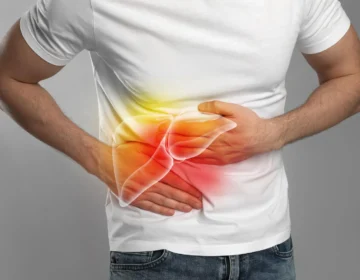
Scientists have uncovered why severely damaged livers can continue failing even after a person stops drinking alcohol.
The human liver is famous for its ability to regenerate. Ancient myths even referenced its seemingly endless capacity to heal. But in people with severe alcohol-related liver disease, that recovery system can suddenly fail, leaving the organ unable to repair itself even after drinking stops.
Now, scientists at the University of Illinois Urbana-Champaign, Duke University, and the Chan Zuckerberg Biohub Chicago say they have uncovered a major reason why.
In a study published in Nature Communications, the researchers found that chronic alcohol damage traps liver cells in a dysfunctional “in-between” state. Instead of fully regenerating or continuing their normal jobs, the cells become stuck midway through the repair process, gradually contributing to liver failure.
The discovery sheds light on one of the deadliest forms of liver disease and could eventually lead to new treatments that help damaged livers recover without transplantation.
Why the Liver Stops Healing
Under normal conditions, the liver can regrow after injury or even after part of it is surgically removed. To do this, mature liver cells temporarily rewind into a more flexible, fetal-like state that allows them to multiply before returning to their specialized roles.
But the new research shows that in alcohol-associated hepatitis and cirrhosis, the process breaks down halfway through.
To understand what was happening inside diseased livers, the researchers analyzed healthy and damaged human liver tissue using several advanced genetic tools, including RNA sequencing and chromatin accessibility profiling.
Their investigation pointed to a hidden problem deep inside the cell’s genetic machinery: widespread RNA missplicing .
Before cells can build proteins, RNA instructions copied from DNA must be edited through a process called splicing. Scientists often compare the process to film editing, where sections are cut and rearranged to produce a working final product. If the editing goes wrong, cells may still produce proteins, but the proteins can malfunction or end up in the wrong location.