Scientists Warn Low Earth Orbit Could Suddenly Collapse .A major solar storm does not need to smash satellites apart directly to create a crisis in orbit. It may only need to interrupt the tracking, commands, and avoidance maneuvers that keep today’s crowded satellite environment under control.
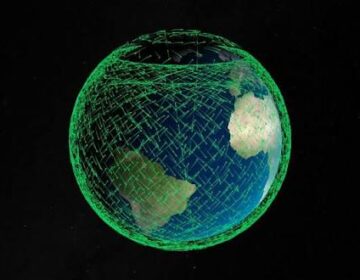
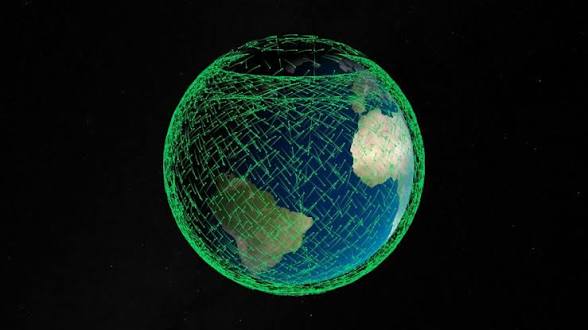
That risk is growing as low Earth orbit fills with mega constellations, large networks of satellites launched and replaced in rapid cycles. These spacecraft support internet access, communications, weather monitoring, navigation, and other services. However, they also add congestion to an orbital region where objects travel at roughly 17,000 miles per hour (27,000 kilometers per hour).
A new paper led by Sarah Thiele, who began the work as a PhD student at the University of British Columbia and is now at Princeton, attempts to measure how fragile this system has become. The study introduces a metric called the Collision Realization And Significant Harm Clock, which estimates how long it could take for a serious collision to occur if satellites could no longer maneuver or if operators lost reliable awareness of where objects were.
The result is alarming. Using satellite catalog data from June 2025, the researchers calculated that if operators lost the ability to send commands for avoidance maneuvers, a catastrophic collision could occur in around 2.8 days. A broader version of the CRASH Clock, based on all resident space object interactions, was 5.5 days. Back in 2018, before the rapid expansion of mega constellations, that value was 164 days.
Solar storms as a systemic threat
Satellites in low Earth orbit do not simply coast along fixed paths. They depend on station keeping, tracking updates, and collision avoidance maneuvers. According to SpaceX’s most recent biannual report cited in the study, Starlink satellites performed 144,404 collision avoidance maneuvers between December 1, 2024, and May 31, 2025. That averages 41 maneuvers per satellite per year, or one avoidance maneuver every 1.8 minutes across the Starlink network.