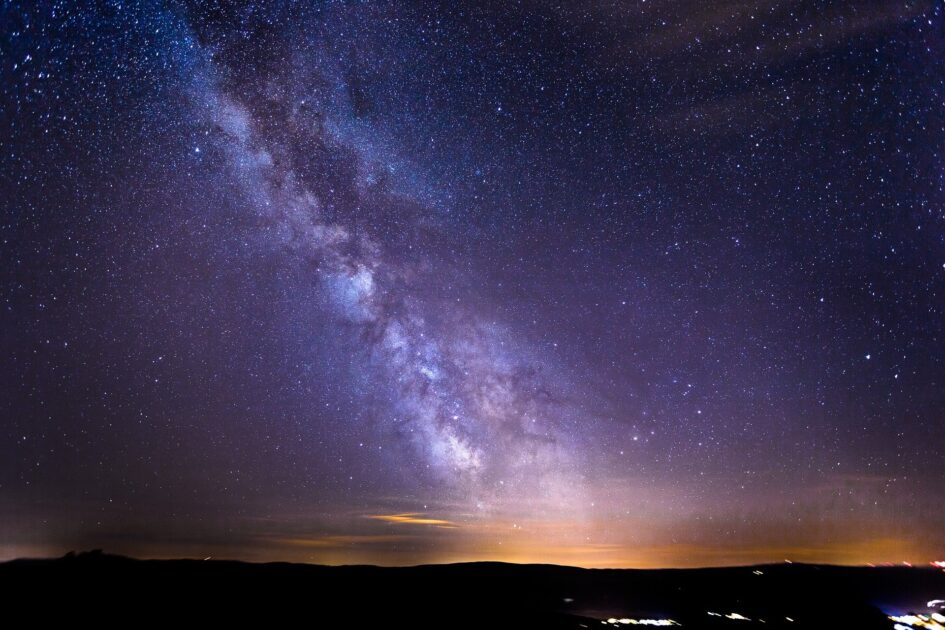
Astronomers have finally identified where the Milky Way’s star-making activity fades, uncovering a long-sought boundary in our galaxy.
Determining how far the Milky Way extends has always been tricky because its disk does not end abruptly it gradually fades into space. Now, researchers have identified a clear boundary for where new stars are actively forming. By studying stellar ages, an international team has shown that most star formation in our galaxy takes place within about 40,000 light-years of the galactic center.
The team combined observations of bright giant stars with advanced simulations of how galaxies evolve. This approach revealed a distinct “U-shaped” pattern in the ages of stars, which marks the outer limit of the Milky Way’s star-forming region.
“The extent of the Milky Way’s star-forming disc has long been an open question in Galactic archaeology; by mapping how stellar ages change across the disc, we now have a clear, quantitative answer,” remarked the paper’s lead author, Dr. Karl Fiteni, now based at the University of Insubria.
How the Milky Way Grew From the Inside Out
Galaxies do not create stars evenly across their disks. Instead, they grow outward over time. Star formation begins in dense central regions and gradually spreads toward the outer disk over billions of years, a process known as “inside-out” growth. Because of this, stars tend to be younger at greater distances from the center.
The Milky Way follows this expected pattern, but only up to a certain point. The study found that stellar ages decrease with distance from the center until about 35,000 to 40,000 light-years. Beyond that, the trend flips and stars become older again as distance increases. This creates the characteristic U-shaped age pattern.
By comparing this pattern with detailed galaxy simulations, the researchers confirmed that the youngest region corresponds to a sharp drop in star formation efficiency. This marks the true boundary of the Milky Way’s star-forming disk. “The data now available allow increasingly precise stellar ages to serve as powerful tools for decoding the story of the Milky Way, ushering in a new era of discovery about our home Galaxy.”