Saturn’s magnetic shield behaves in a way that defies Earth-based expectations.
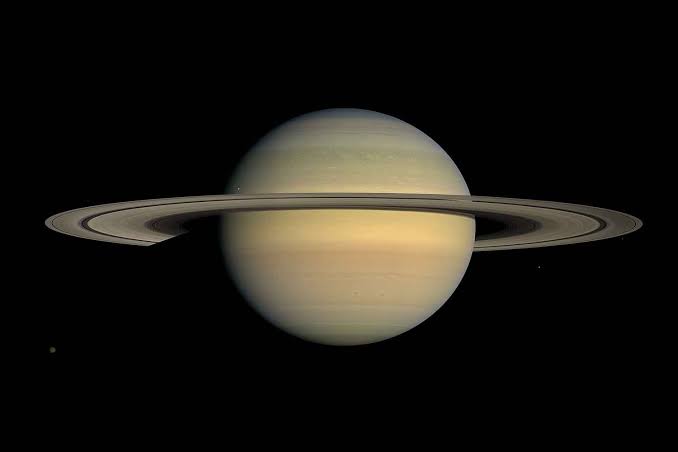
Scientists analyzing data from the Cassini-Huygens mission have identified an unexpected feature in Saturn’s magnetic shield.
According to the team, the finding shows that giant planets follow a different set of rules than Earth when it comes to how their magnetospheres behave.
The study, published in Nature Communications, includes Dr. Licia Ray and Dr. Sarah Badman from Lancaster University, along with Dr. Chris Arridge, formerly of Lancaster.
Cassini was launched to explore Saturn and its system, including its rings, moons, and surrounding space environment. The mission was a collaboration between NASA, the European Space Agency , and the Italian space agency , and the spacecraft orbited Saturn from 2004 to 2017.
The new findings support a long-standing idea that the rapid rotation of large planets like Saturn can outweigh the influence of the solar wind, the stream of charged particles from the Sun, in shaping their “magnetospheres.”
A magnetosphere is the region around a planet where its magnetic field protects it from the solar wind. Near the poles, however, funnel-shaped openings known as “magnetospheric cusps” allow charged particles from the Sun to enter the atmosphere.
A Surprising Shift in Saturn’s Magnetic Structure
Researchers examined Cassini data collected between 2004 and 2010 to pinpoint the position of Saturn’s magnetospheric cusp. They found a clear contrast with similar measurements at Earth.
Saturn’s powerful rotation appears to “drag” the cusp away from noon, shifting it toward the afternoon side. On average, it sits between 13:00 and 15:00 local time and can extend as far as 20:00. This duskward shift shows that a planet’s rotation rate can significantly reshape its surrounding space environment.