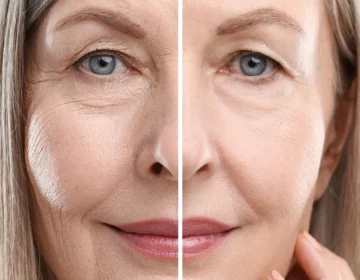
Age may seem like a straightforward measure of health, but biology tells a more complex story.Can you judge an adult’s physical condition based only on their age? The answer is: “It depends.”
While the body’s performance generally declines over time and the risk of age-related diseases increases, people of the same age can differ greatly in health and physical aging. Chronological age only partly reflects biological age, which represents the body’s true physiological state and is shaped by lifestyle, genetics, and environmental factors.
So how can biological age be measured more accurately?
This question drives the international MARK-AGE consortium. In a large cross-sectional study across Europe, researchers identified age-related patterns in ten key blood biomarkers for men and women. These markers can be combined to estimate biological age.
In a recent publication led by Maria Moreno-Villanueva and Alexander Bürkle of the University of Konstanz, the team tested this “bioage score” and used it to uncover additional biomarkers linked to aging.
One biomarker is not enough
Earlier studies have proposed individual biomarkers as indicators of biological age, but none has proven reliable on its own.
“The biological aging process is very complex. It affects all of the body’s tissues and organs, and it is not the result of a single cause. As a result, single biomarkers are not enough to reliably determine a person’s biological age,” Morena-Villanueva explains. “On top of this, there are also differences in how men and women age.”
To address this, the MARK-AGE team developed sex-specific combinations of biomarkers to calculate biological age more accurately. They analyzed data from about 3,300 participants across eight European countries and measured 362 biomarkers per person. From this large dataset, they identified ten key biomarkers for each sex and used them to calculate an individual bioage score that reflects biological aging.