Regional wind patterns on Venus may stabilize mountain temperatures while generating dust storms that future landers must withstand.
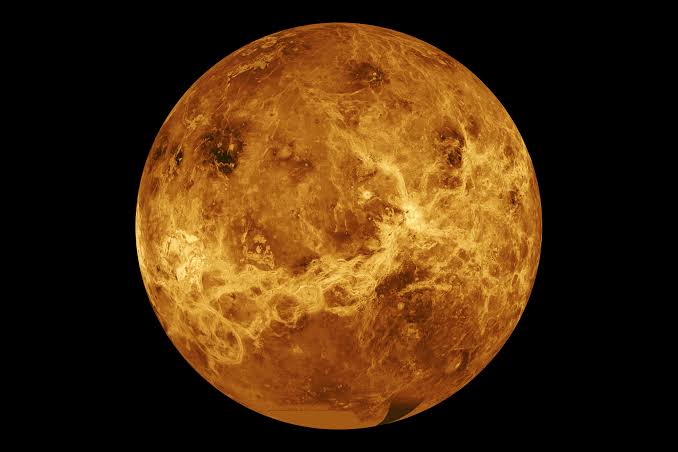
For decades, the surface of Venus has remained one of the least understood environments in the solar system. With only a handful of landers ever transmitting data before succumbing to the planet’s extreme heat and pressure, scientists have had to work with limited direct measurements.
Carl Sagan once cautioned against drawing dramatic conclusions from sparse evidence, noting how easy it is to imagine fantastical scenarios such as dinosaurs roaming the planet. Yet limited data does not mean no insight. Careful analysis and modeling can extract meaningful patterns from even small datasets.
A recent study led by Maxence Lefèvre of the Sorbonne aims to do exactly that. Using the measurements that do exist from past missions, the team developed a model to estimate wind behavior and dust movement at the planet’s surface. Their goal is practical: to better prepare the next generation of Venus missions for the environmental conditions they are likely to encounter.
Sparse data, stronger models
The study, currently available as a preprint on arXiv, centers on two key factors: temperature variation and dust transport. Rather than treating Venus as a single uniform environment, the researchers divided the planet into distinct regions. This regional approach allows them to isolate the processes that shape local conditions, offering a more realistic picture of how the surface environment behaves. At the core of both temperature shifts and dust movement is the same driving force that shapes weather on Earth.
Measurements from Venera, one of the only craft to ever successfully land on Venus’ surface, put the wind speed down at the bottom of the atmosphere at a measly 1 m/s. Compared to 20 m/s on Earth or even 40 m/s on Mars, that may not sound like much.
But Venus’ atmosphere is thicker than either ours or Mars’, so it would require a lot more energy to get it up to speeds equivalent to those of its sister planets. Even so, it still has a major impact on both the temperature on the surface and the amount of dust in the air.