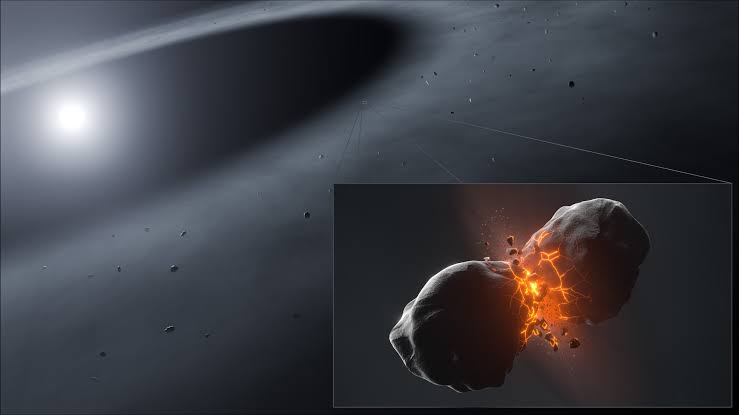
What looked like a mysterious exoplanet was actually the sparkling debris from a violent collision between massive space rocks. Even more astonishing, astronomers watched a second collision unfold in the same system, revealing a surprisingly chaotic neighborhood where new worlds may be born.
In a rare skywatching surprise, NASA’s Hubble Space Telescope (HST) recorded the aftermath of space rocks smashing together in a nearby planetary system.
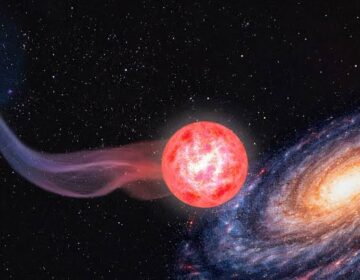
Astronomers first noticed a bright point of light and thought it was a dust-coated exoplanet shining by reflected starlight. Then the “exoplanet” faded away. Not long after, a different bright object appeared, and the international research team, including Northwestern University’s Jason Wang, realized the objects were not planets. Instead, they were glowing debris left behind by a cosmic crash.
Researchers concluded that two separate, powerful impacts created two bright debris clouds inside the same planetary system. That makes the system a rare chance to watch processes linked to planet formation and to study the materials that can eventually gather into new worlds.