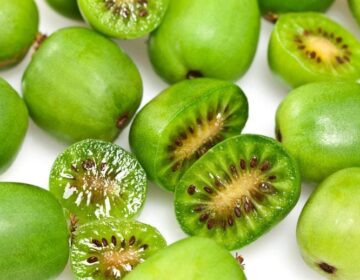
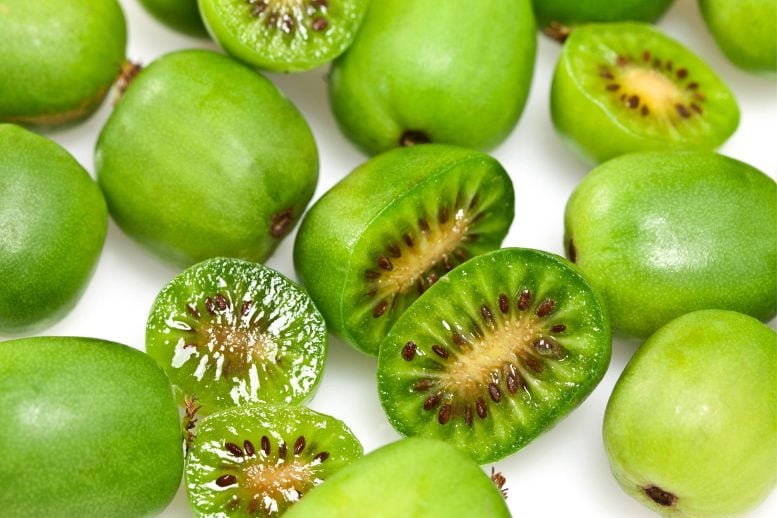
A little-studied fruit related to the kiwiberry is drawing scientific attention for its potential to interfere with early cancer-related processes.
Lung cancer remains the leading cause of cancer-related death in the United States and worldwide, with smoking as its primary risk factor. As a result, scientists continue searching for compounds that can block the earliest stages of cancer before tumors develop.
One unexpected candidate is a small fruit known as “Sarunashi” (Actinidia arguta), commonly referred to as the kiwiberry, which is being studied by researchers at Okayama University.
In a study published in the journal Genes and Environment, the team found that juice from the fruit reduced lung tumor formation in mice exposed to NNK, a tobacco-related carcinogen. The juice also lowered the number of tumor nodules in the lungs, while one of its best-known compounds, isoquercetin (isoQ), showed protective effects of its own.
In cell experiments, the juice also suppressed “Akt,” a protein that helps drive cancer growth. Together, those results suggested the fruit may interfere with both the start of cancer and the signals that help tumors keep growing.
Evidence From DNA and Mutation Studies
They also found that Sarunashi juice reduced the DNA-damaging effects of NNK and “MNNG,” which are chemicals known to cause mutations and are often used in cancer research. But that protection disappeared in a strain that lacks important DNA repair enzymes. This suggests the juice may help cells repair harmful genetic damage rather than simply shielding them from it.
Dr. Arimoto-Kobayashi said, “In this study, we sought to investigate the chemo-preventive effects of A. arguta juice and its constituting component isoQ on 4-(methylnitrosamino)-1-(3-pyridyl)-1-butanone (NNK)-induced lung tumorigenesis in A/J mice, and identify the possible mechanisms underlying the anti-tumorigenic effects of A. arguta.”