Kitchen sponges shed microplastics, but water use drives most environmental harm. Real-world and lab data show reducing water consumption has the greatest impact.
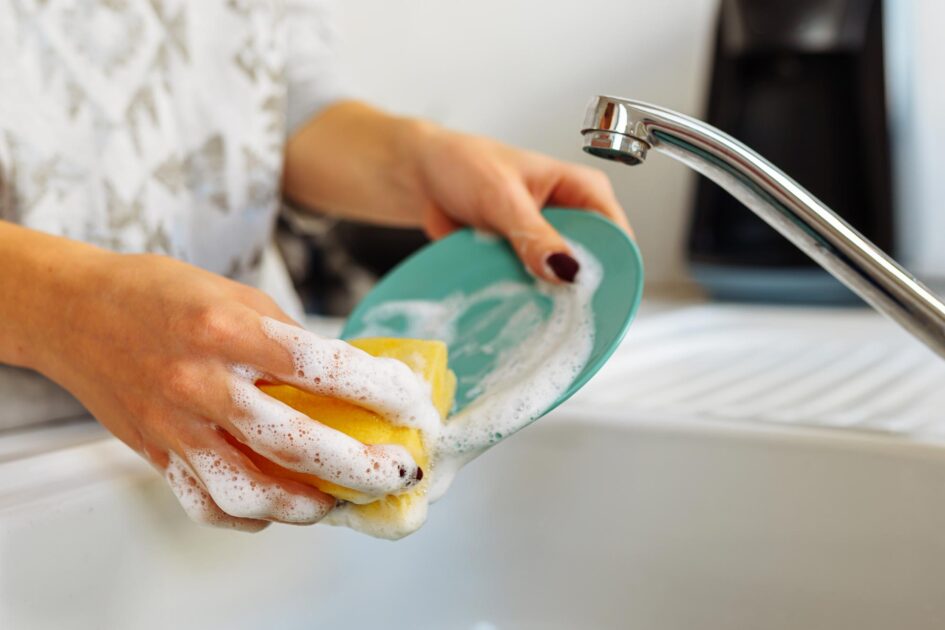
Kitchen sponges may look harmless, but each scrub can release tiny plastic fragments that slip unnoticed down the drain. These microplastics, now found everywhere from oceans to drinking water, have many sources, and researchers are beginning to realize that everyday household items play a role.
A team led by the University of Bonn set out to measure just how much microplastic comes from sponges and whether it poses a meaningful environmental threat. Their findings reveal a nuanced picture. Sponges do shed plastic, but another factor dominates the overall impact of dishwashing.
Microplastics are now widespread in the environment, showing up in oceans, soil, air, and even food and drinking water. Studies suggest they can be ingested by wildlife and humans, where they may carry harmful chemicals or trigger inflammation in living tissues. Despite growing concern about these potential health and ecological effects, many everyday sources of microplastics remain poorly understood.
How Researchers Measured Microplastic Release
The researchers asked households in Germany and North America to use one of three sponge types during their normal dishwashing routines. By weighing each sponge before and after use, the team estimated how much material was lost and how much microplastic was released.
Alongside this, laboratory experiments used a custom device called the “SpongeBot,” which simulates the physical stress of scrubbing. This combination of real-world data and controlled testing helped produce more reliable results.