Fossil bone analysis shows that mysterious tiny Liaoningosaurus specimens are actually hatchling ankylosaurs, offering rare evidence of early armored dinosaur development.
A long-standing puzzle involving dozens of unusually small dinosaur fossils has finally been resolved.
Specimens once believed to represent a tiny species of armored dinosaur are now understood to be the remains of baby ankylosaurs. The finding provides scientists with rare clues about how these heavily armored dinosaurs grew during the earliest stages of life.
For more than twenty years, paleontologists have debated the identity of fossils belonging to a dinosaur known as Liaoningosaurus paradoxus. The species has puzzled researchers since its initial description in 2001, when it was classified as a type of armored dinosaur called an ankylosaur.
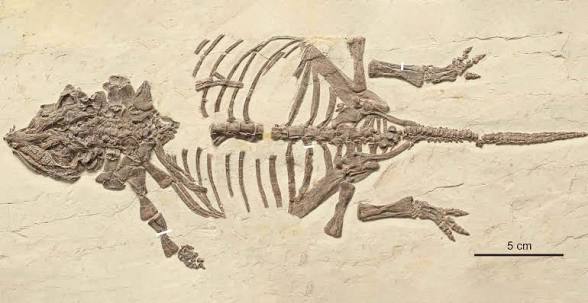
Several fossils attributed to Liaoningosaurus have been uncovered. However, each specimen measures less than 40 centimeters in length. This is extremely small compared with adult ankylosaurs, which commonly grow to lengths of three meters or more.
Because no larger skeletons have ever been discovered, some researchers suggested that Liaoningosaurus might represent the first known miniature ankylosaur species. Others even proposed that the dinosaur may have lived partly in water.
A new study published in the Journal of Vertebrate Paleontology has now challenged those ideas. The research suggests that the fossils do not represent small adults at all. Instead, they likely belong to very young ankylosaurs. One specimen even displays evidence that it had only recently hatched, making it the youngest ankylosaur yet identified in the fossil record.