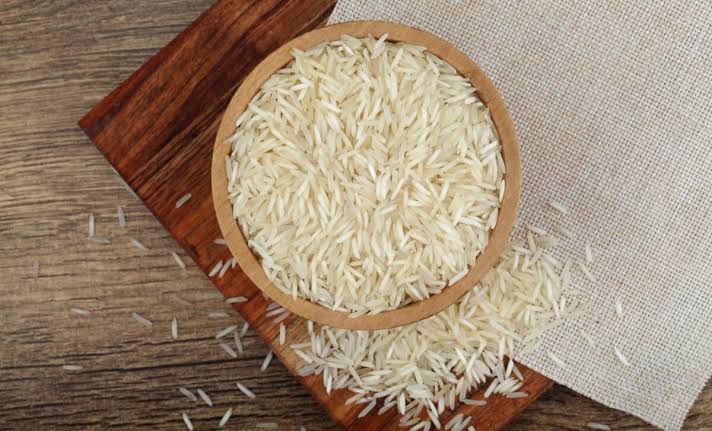
Scientists Discover Strange Property of Rice .Rice behaves in an unexpected way under pressure. When compressed quickly, it becomes weaker, but under slow pressure it stays strong. This insight is helping scientists develop a new material that could be used in “soft” robots that automatically adjust stiffness, as well as protective gear that responds to how fast an impact occurs.
Using this property, researchers created a new type of “metamaterial,” an engineered structure designed to exhibit behaviors not found in natural materials.
In a study published in Matter, an international team led by the University of Birmingham found that tightly packed rice grains respond very differently depending on how quickly force is applied.
At higher speeds, the material weakens through a process known as “rate softening,” which is unusual for most materials. This happens because friction between the grains drops significantly as speed increases, disrupting the internal force networks that normally carry the load.
Designing a Smart Granular Material
To take advantage of this effect, the team combined rice-based particles with materials such as sand, which become stronger under rapid loading. The result is a composite granular material that can bend, buckle, or stiffen depending on whether forces are applied gradually or suddenly, without relying on electronics, sensors, or active control.
Dr. Mingchao Liu, from the University of Birmingham, said: “Rice might be best known as a staple food globally, but it’s rarely associated with advanced engineering. Our research shows that it can form the basis of a new class of functional materials.”
He continues, “Rather than treating this phenomenon as curiosity, we turned it into a design principle. This approach enabled us to create a material that can bend, buckle, or stiffen differently under slow movements versus sudden impacts – without electronics, sensors, or active control. Instead of telling a structure how to respond, we let physics decide: fast loads trigger one behavior, slow loads another.”