
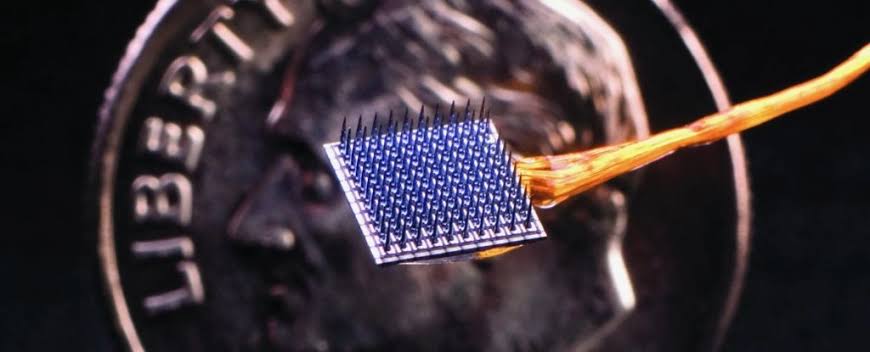
A radically miniaturized brain implant called BISC is redefining what’s possible in human–computer interaction, offering a paper-thin, wireless, high-bandwidth link directly to the brain.
With over 65,000 electrodes and unprecedented data throughput, it enables advanced AI decoding of thoughts, intentions, and sensory experiences while remaining minimally invasive.
A new brain implant stands to transform human-computer interaction and expand treatment possibilities for neurological conditions such as epilepsy, spinal cord injury, ALS, stroke, and blindness – helping to manage seizures and restore motor, speech, and visual function. It does this by creating a minimally invasive, high-throughput communication channel directly into and out of the brain.
What makes this system so promising is its very small size combined with the ability to move large amounts of data very quickly. Developed by teams at Columbia University, NewYork-Presbyterian Hospital, Stanford University, and the University of Pennsylvania, this brain-computer interface is built around a single silicon chip that provides a wireless, high-bandwidth bridge between the brain and external computers. The platform is called the Biological Interface System to Cortex (BISC).
In a study published today , the researchers describe BISC as consisting of three main parts: a single-chip implant, a wearable “relay station,” and specialized software that runs the system.
“Most implantable systems are built around a canister of electronics that occupies enormous volumes of space inside the body,” says Ken Shepard, Lau Family Professor of Electrical Engineering, professor of biomedical engineering, and professor of neurological sciences at Columbia University, who is one of the senior authors on the work and guided the engineering efforts.
“Our implant is a single integrated circuit chip that is so thin that it can slide into the space between the brain and the skull, resting on the brain like a piece of wet tissue paper.”