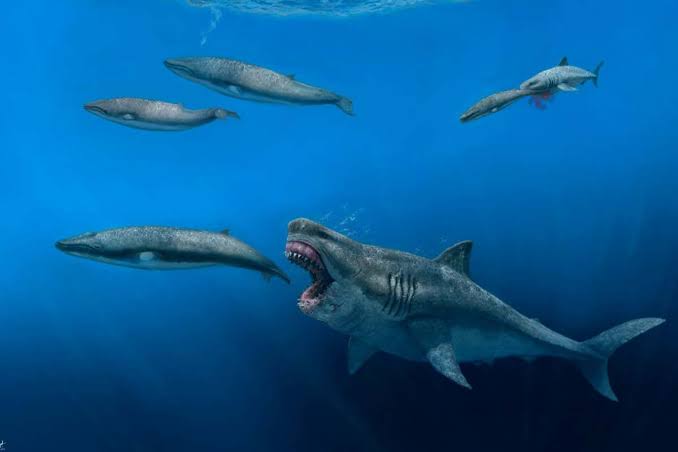
Scientists have uncovered evidence of a colossal shark that lived off northern Australia about 115 million years ago, revealing that modern shark lineages grew to immense sizes far earlier than expected.
Rare vertebrae from rocks once part of the ancient Tethys ocean show that this early lamniform predator shared the seas with giant marine reptiles during the Age of Dinosaurs.
Early Modern Sharks and Ancient Origins
Sharks are well-known ocean predators, and their lineage stretches back more than 400 million years. The ancestors of today’s shark groups, however, began to appear during the Age of Dinosaurs, with the earliest fossils of these modern lineages dating to roughly 135 million years ago.
These early forms, called lamniforms, were relatively small at around 1 m in length. Over millions of years, they eventually diversified into enormous species, including the well-known ‘Megalodon’, which may have reached lengths of more than 17 m, and the modern Great White shark, an apex predator that grows to about 6 m.
Sharks have skeletons made of cartilage rather than bone, so most of their bodies do not fossilize easily. As a result, their fossil record consists mainly of teeth, which are shed continuously during feeding. These teeth often accumulate in ancient seafloor sediments. They are regularly found in the same layers as the bones and teeth of fishes and the enormous marine reptiles that ruled many prehistoric oceans.