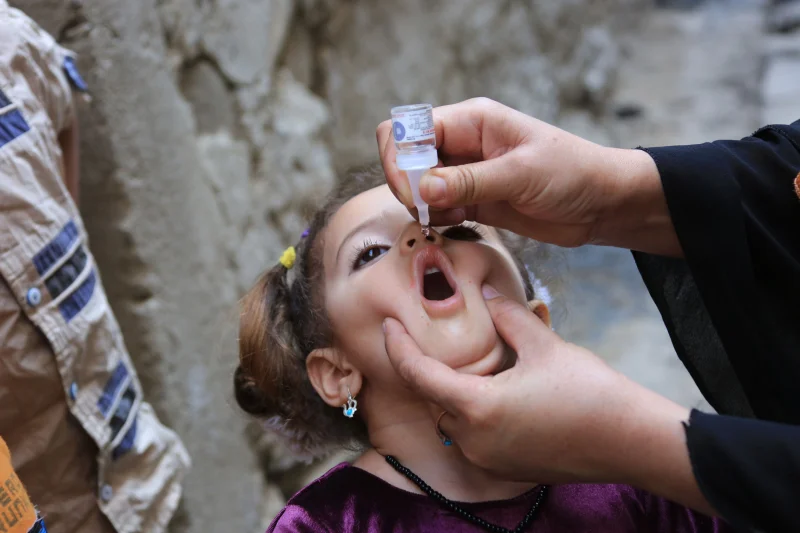
Data from Pakistan’s Polio Eradication Programme shows that a majority of the environmental samples for poliovirus, which causes the crippling disease, collected during the first two months of 2026 have tested negative.
Moreover, a comparison of the first two months of 2025 with the current year shows a more than threefold reduction in positive environmental samples. However, ongoing Pakistan-Afghanistan tensions could create an opportunity for the virus to rebound during the upcoming high-transmission season, which may begin next month.
According to a document from the Polio Eradication Programme, 111 environmental samples out of 126 tested negative across the country in February.
It is worth noting that sewage samples are a key indicator of whether polio vaccination campaigns are being carried out successfully. After samples are detected, polio campaigns are launched in the area to eradicate the virus.
A polio case can be reported in any city due to the frequent movement of people, but the presence of the virus in sewage samples indicates that the vaccination campaign in the area did not meet its target. The presence of the virus in sewage also indicates that the immunity of local children has declined and that they are at risk of the disease.
Yearly comparison shows that 39 positive environmental samples were reported in the first two months of 2026, compared with 144 in the first two months of 2025 nationwide. Similarly, six children were paralysed during the first two months of last year. However, only one child has contracted the virus during the first two months of the current year.
The document also shows encouraging numbers: in Balochistan, 11 environmental samples tested positive, compared with 38 in 2025. In Punjab, only one positive sample has been reported, compared with 27 in 2025.
Khyber Pakhtunkhwa’s data shows that during the first two months of the ongoing year, six positive environmental samples have been reported. During the same two months of 2025, as many as 26 positive samples were reported. Similarly, in Sindh, 27 positive environmental samples have been reported this year; last year as many as 50 positive environmental samples were reported during the first two months.