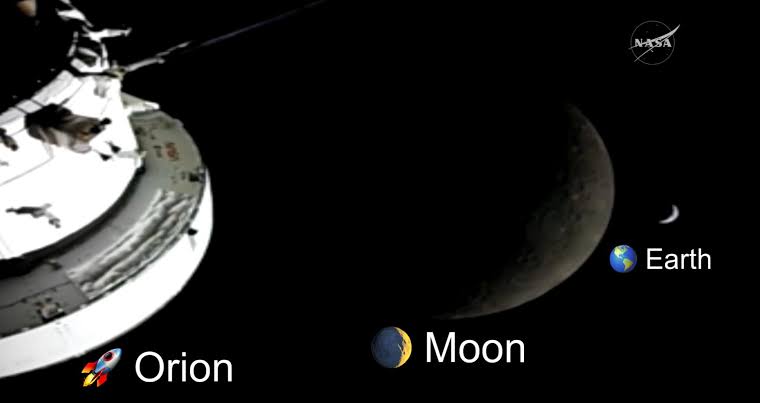
Artemis II mission flew deeper into space than any humans before them, as they cruised through a rare flyby of the shadowed far side of the moon that revealed a lunar surface under cosmic bombardment.
The six-hour survey of the normally hidden hemisphere of Earth’s only natural satellite was highlighted by the astronauts’ direct visual observations of “impact flashes” from meteors pelting the darkened and heavily cratered lunar surface.
About two dozen scientists packed a conference room adjacent to mission control at NASA’s Johnson Space Centre in Houston to record the lunar phenomena witnessed by the Artemis crew in real time as their Orion spacecraft, about the size of an SUV, sailed around the moon roughly a quarter million miles (402,000 km) from Earth.
The six-hour flyby, which swooped to within 4,070 miles of the lunar surface, came six days into a spaceflight marking the world’s first voyage of astronauts to the vicinity of the moon since NASA’s Cold War-era Apollo missions more than half a century ago.
Six of those missions landed two-man teams on the moon between 1969 and 1972 — the only 12 humans ever to walk on its surface. Artemis, a successor to the Apollo program, aims to repeat that achievement by 2028, ahead of China’s first landing, and to establish a long-term US lunar presence over the next decade, including a moon base to serve as a proving ground for potential future missions to Mars.
While designed as a crewed dress rehearsal for future lunar excursions, Artemis II generated a wealth of new material for lunar scientists to study, including meteor impact flashes recorded during Monday’s flyby that were reminiscent of sparks and streaks of light described by some of Apollo’s astronauts.
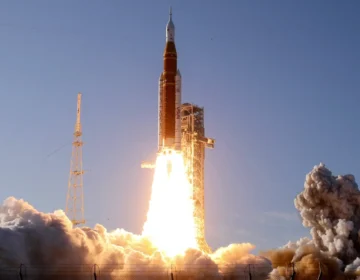
The Artemis II crew, riding in their Orion capsule since launching from Florida last week, began their sixth day of spaceflight as they awoke on Monday to a pre-recorded message from the late NASA astronaut Jim Lovell, who flew aboard the Apollo 8 and Apollo 13 moon missions.