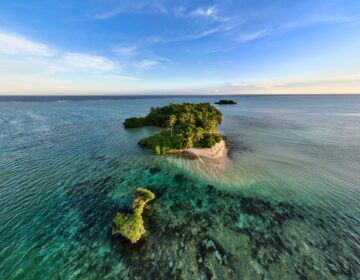
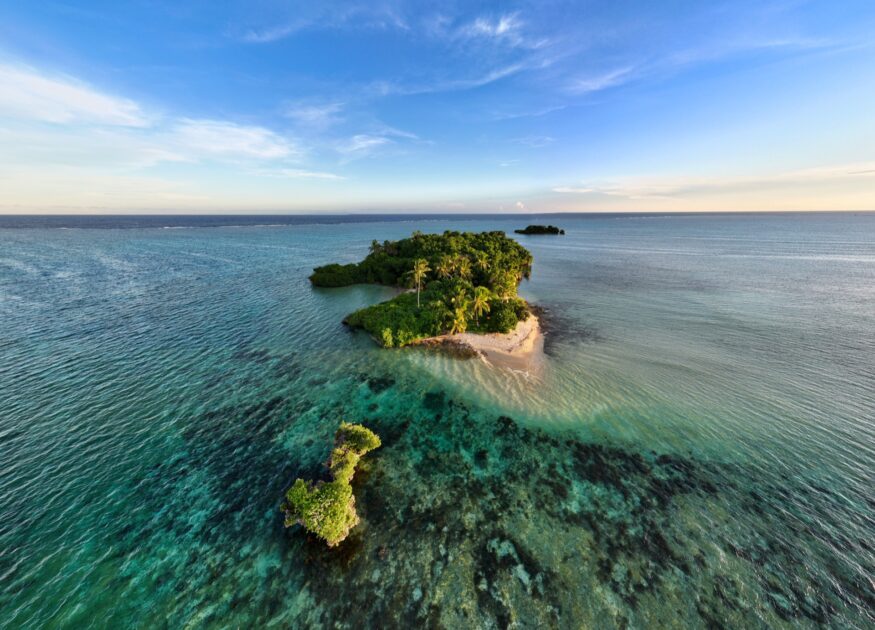
Macquarie Island sits in the remote Southern Ocean roughly halfway between Tasmania and Antarctica. Visitors arriving on this narrow and windswept island quickly notice the abundant wildlife. Elephant seals lie across dark coastal beaches, king penguins move in groups up green slopes, and albatrosses glide over the open, treeless highlands.
A closer look, however, reveals that the landscape is shifting. Parts of the island’s slopes are becoming increasingly waterlogged, and distinctive megaherbs such as Pleurophyllum and Stilbocarpa are gradually disappearing from areas where they once thrived.
For years, researchers suspected that rising rainfall was responsible for these ecological changes. New research published in Weather and Climate Dynamics now confirms that increasing precipitation is a major factor. The findings also suggest that the changes seen on this isolated UNESCO World Heritage site reflect a much larger climate story unfolding across the Southern Ocean.
A major – but little observed
The Southern Ocean itself is a major—but still poorly observed—component of the global climate system. It plays a critical role in regulating Earth’s climate.
It absorbs much of the excess heat trapped by greenhouse gases and a large share of the carbon dioxide emitted by human activity.
Storms in the Southern Ocean also influence weather patterns across Australia, New Zealand, and the globe.
Yet it is also one of the least observed places on Earth.
With almost no land masses, only a handful of weather stations, and ubiquitous cloud cover, satellites and simulations struggle to capture what is actually happening there.
That makes Macquarie Island’s climate record from the Bureau of Meteorology and the Australian Antarctic Division exceptionally valuable, providing one of the very few long-term “ground truth” records anywhere in the Southern Ocean.
These high-quality records of the observed daily rainfall and meteorology date back more than 75 years and are commonly used to validate satellite products and numerical simulations.