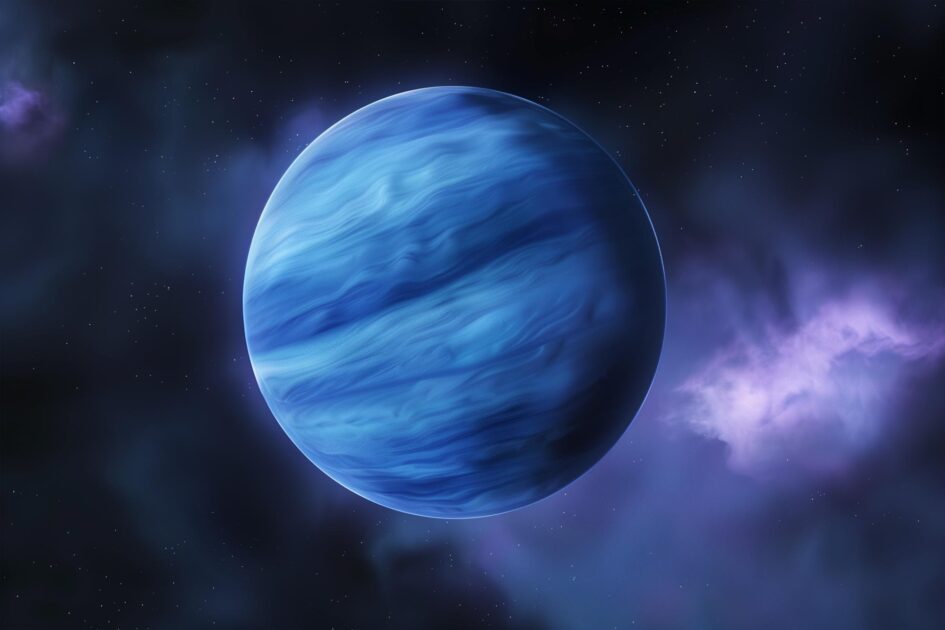
Astronomers have finally weighed a wandering “rogue” planet, uncovering a Saturn-mass world flung into the galaxy after a dramatic planetary breakup.
A new study reports that astronomers have directly measured both the mass and distance of a newly found free-floating planet by observing it at the same time from Earth and from space. This rare combination of viewpoints made it possible to pin down details that usually remain out of reach.
The results shed light on the many ways planets can be expelled from their home systems and sent drifting through interstellar space. While only a small number of free-floating planets have been identified so far, researchers expect discoveries to accelerate in the near future, especially with the NASA Nancy Grace Roman Space Telescope campaign scheduled to launch in 2027.
In a related Perspective, Gavin Coleman notes that “Simultaneous space- and ground-based observations of microlensing events could be applied in the planning of future exploratory missions and could lead to a better understanding of how planets form across the Galaxy.”
Rogue Planets and a Subtle Signal
Most planets orbit one or more stars, but growing evidence shows that some worlds travel through the galaxy alone. These solitary objects, known as free-floating or rogue planets, have no known stellar partner. Because they give off very little light, astronomers usually detect them only when their gravity briefly bends and amplifies the light of a distant background star. This effect is called microlensing. A major drawback of microlensing is that it typically does not reveal how far away the planet is, which makes it difficult to determine its mass on its own. As a result, many basic properties of these wandering planets have remained uncertain.