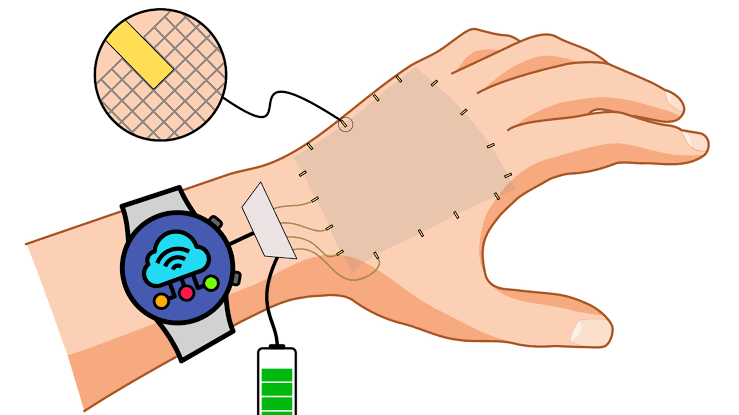
Researchers are replacing rigid silicon-based AI hardware with stretchable, neuromorphic electronics that mimic how the brain processes information, opening new possibilities for long-term human-machine integration.
Modern artificial intelligence can outperform humans in tasks ranging from image recognition to medical data analysis, but there is one environment where today’s hardware still struggles: the human body.
The problem is surprisingly simple. Human tissues are soft, flexible, and constantly moving. Conventional electronics are not. Even the most advanced silicon chips remain rigid, making long-term integration with organs, muscles, and skin extremely difficult. Devices attached to a beating heart, expanding lungs, or bending joints can irritate tissue, lose contact, and eventually fail.
Researchers are now pursuing a radically different approach. Instead of forcing the body to adapt to electronics, they are redesigning electronics to behave more like the body itself.
A review published in the International Journal of Extreme Manufacturing highlights the rise of soft neuromorphic electronics, a new class of devices that combine sensing, memory, and computing in materials that can stretch, bend, and conform to living tissue. The technology draws inspiration from the brain, not only in how it processes information but also in how it physically interacts with its environment.
Electronics Inspired by the Brain
Unlike traditional circuits that rely exclusively on electrons moving through metal pathways, these systems use soft materials such as flexible polymers and gel-like ionogels that transport both electrons and ions.
This mechanism, known as organic mixed ionic-electronic conduction, more closely resembles the electrochemical signaling used by the nervous system. The active materials can absorb and release ions from their surroundings, continuously altering their internal electrical state.