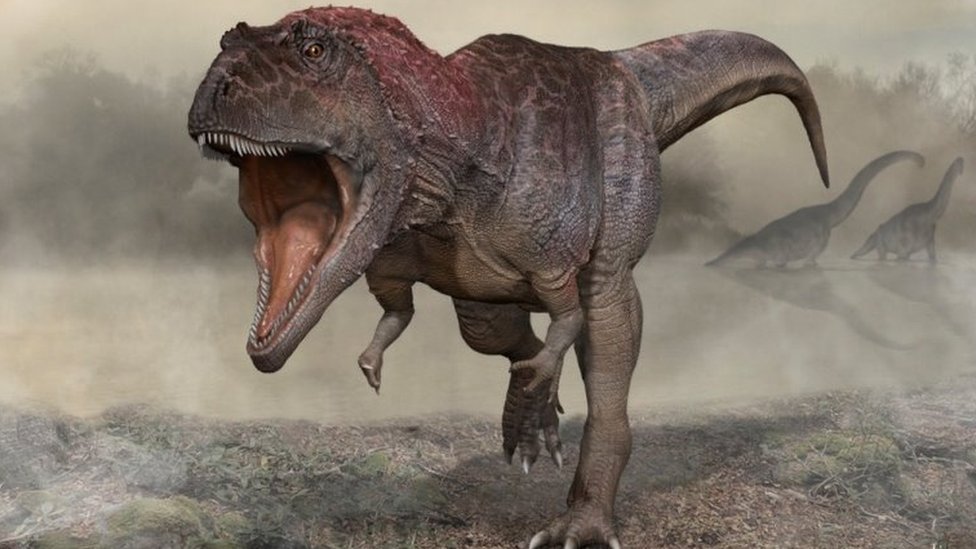
A new study suggests T. rex and other giant predators evolved tiny arms because their massive skulls took over as the primary hunting weapon.
As their bites became more powerful, their forelimbs may have gradually faded into evolutionary leftovers.
Why T. Rex and Other Giant Predators Evolved Tiny Arms
The famously tiny arms of Tyrannosaurus rex may have evolved because these giant predators increasingly relied on massive skulls and powerful jaws to attack prey, according to a new study led by researchers from UCL (University College London) and the University of Cambridge.
The research, published in Proceedings of the Royal Society B, analyzed 82 species of theropods, a group of mostly meat-eating, two-legged dinosaurs. The scientists found that reduced forelimbs appeared independently in five major theropod groups, including tyrannosaurids, the family that included T. rex.
Their findings suggest that shrinking arms were tied more closely to the evolution of heavily built skulls and strong bites than to overall body size. In other words, tiny arms were likely not just an accidental side effect of becoming enormous.
Giant Dinosaur Skulls Replaced Claws
The researchers believe the rise of massive prey animals, including giant sauropods (long-necked, long-tailed plant eaters), may have pushed predators toward a different hunting strategy. Instead of grabbing prey with their arms and claws, these dinosaurs may have depended more on powerful jaws and skull strength.
Lead author Charlie Roger Scherer, a PhD student at UCL Earth Sciences, said: “Everyone knows the T. rex had tiny arms, but other giant theropod dinosaurs also evolved relatively small forelimbs. The Carnotaurus had ridiculously tiny arms, smaller than the T. rex.
“We sought to understand what was driving this change and found a strong relationship between short arms and large, powerfully built heads. The head took over from the arms as the method of attack. It’s a case of ‘use it or lose it’ – the arms are no longer useful and reduce in size over time.
“These adaptations often occurred in areas with gigantic prey. Trying to pull and grab at a 100ft-long sauropod with your claws is not ideal. Attacking and holding on with the jaws might have been more effective.”
Scherer added that the evidence points toward skulls becoming stronger before forelimbs began shrinking.