Wind Farms Alter Ocean Dynamics
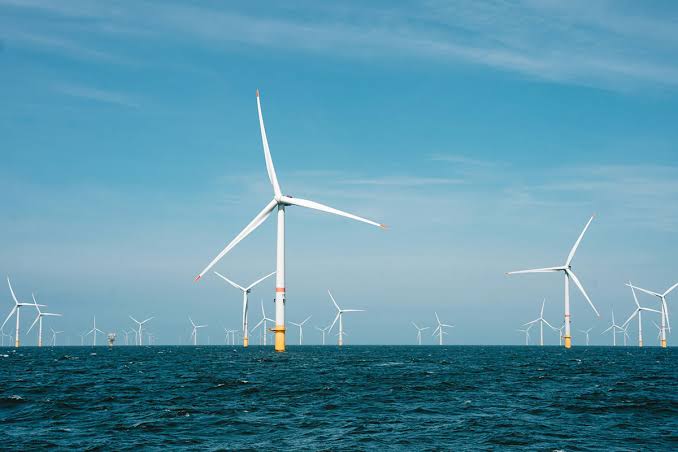
These changes play a key role in determining where mud and organic material travel and settle. Researchers at Hereon found that existing wind farms are already shifting sediment distribution across the North Sea. Each year, this redistribution involves as much as 1.5 million tons of mud and the carbon it contains.
A portion of these sediments comes from the remains of marine plants and animals. This material includes particulate organic carbon (POC), which sinks to the seafloor and can remain stored for centuries. Because of this, the seafloor acts as a carbon sink, helping oceans capture and store carbon and reduce the impacts of climate change.
Modeling Sediment Redistribution and Carbon Storage
To study these processes, the team developed a new computer model that integrates atmospheric conditions, waves, ocean currents, and sediment transport in the North Sea. The model builds on earlier Hereon research into how offshore turbines affect air and water movement.
“Our simulations suggest that these amounts will accumulate increasingly over the coming decades as offshore wind farms expand. This could affect the long-term functioning of the ecosystem and carbon storage in the North Sea,” says the study’s lead author, Jiayue Chen, from the Hereon Institute of Coastal Systems – Analysis and Modeling. Notably, about 52 percent of the total sediment redistribution occurs in the German Bight.
“This highlights this region as particularly affected.” As a next step, the researchers plan to investigate how these changes specifically affect particularly sensitive coastal areas like the Wadden Sea, which relies on a continuous supply of sediment to compensate for rising sea levels. They are also examining how these effects influence the role of the ocean as a carbon sink.
“With an improved understanding of sediment distribution and carbon storage in the North Sea, we can assess long-term risks to coastal stability, navigational safety in shipping, and the functioning of ecosystems in the German Bight,” says Jiayue Chen. “Our findings provide a valuable foundation for the sustainable expansion of offshore wind energy and help decision-makers in politics, business, and industry to plan new wind farms in an environmentally friendly way.”