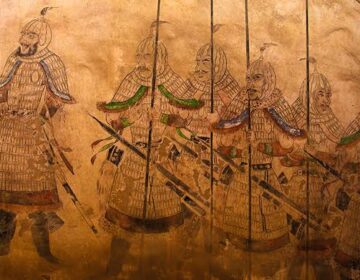

Environmental phenomena and their consequences can disrupt social structures and destabilize political systems. An interdisciplinary research team demonstrated this through the example of the late Tang Dynasty in medieval China.
Climate driven migration is often viewed as a modern crisis, but history tells a different story. An interdisciplinary team of researchers, including scientists from the University of Basel, has shown that large-scale environmental disruption shaped societies more than a thousand years ago.
Their study examined how severe hydrological extremes such as prolonged droughts and destructive floods between 800 and 907 CE influenced political stability and everyday life in China. The findings were published in Nature Communications Earth and Environment.
The period under investigation coincides with the final decades of the Tang dynasty, which ruled from 618 CE and is widely regarded as one of the most culturally and administratively advanced eras in Chinese history. During its height, the empire maintained a complex governing system and fostered remarkable achievements in art, literature, and technology.
Yet by the ninth century, that stability began to weaken. The research focuses on northern China, particularly the region surrounding the Huanghe River (Yellow River), an area central to agriculture, transportation, and political power.
To understand how the climate shifted during this critical period, scientists turned to natural archives known as climate proxies. Among the most valuable of these are tree rings. Trees record environmental conditions in their annual growth patterns. In wetter years, abundant rainfall allows trees to grow more quickly, producing wider rings. In dry years, growth slows, leaving narrower rings. The longer a tree lives, the further back this environmental record extends, offering a detailed timeline of past climate conditions.