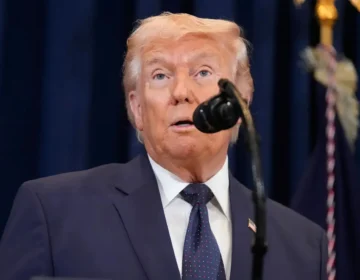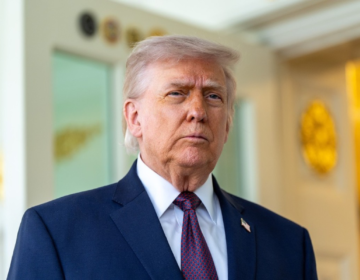
US President Donald Trump threatened to “obliterate” Iran’s power plants if Tehran does not fully reopen the Strait of Hormuz within 48 hours, a significant escalation barely a day after he talked about “winding down” the war.
“If Iran doesn’t fully open, without threat, the Strait of Hormuz, within 48 hours from this exact point in time, the United States of America will hit and obliterate their various power plants, starting with the biggest one first!” Trump said on social media.
Trump’s ultimatum would expand the scope of US strikes to infrastructure that affects daily civilian life in Iran.
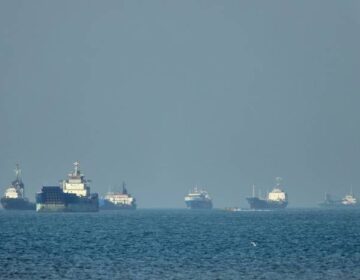
The threat of Iranian attacks has kept most ships from getting through the strait, a narrow waterway that serves as the conduit for around a fifth of global oil and liquefied natural gas supplies, threatening a global energy shock.
Iran’s Khatam al-Anbiya military command headquarters said on Sunday that if the US attacks Iran’s fuel and energy infrastructure, then Iran would target all US energy, information technology and desalination infrastructure in the region.
Energy prices spiked last week after Iran responded to an Israeli attack on its major gas field by hitting Qatar’s Ras Laffan Industrial City, which processes around a fifth of the world’s liquefied natural gas, causing damage that will take years to repair.
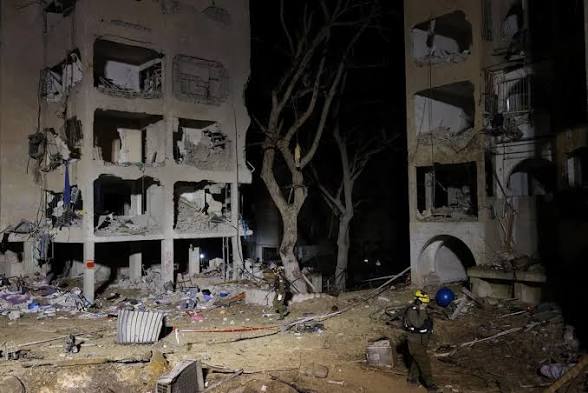
Israeli officials said Iranian forces had for the first time fired long-range missiles, expanding the risk of attacks beyond the Middle East, even as an Iranian strike injured dozens of people not far from Israel’s nuclear site.
Iran launched two ballistic missiles with a range of 4,000 km at the US-British military base at Diego Garcia in the Indian Ocean, Israeli military chief Eyal Zamir said.
The Israeli military said it was the first time Iran had used long-range missiles since the United States and Israel began attacking Iran on February 28.
“These missiles are not intended to strike Israel. Their range reaches European capitals — Berlin, Paris, and Rome are all within direct threat range,” Zamir said in a statement.