The sharpest black hole collision ever detected just gave Einstein another win—and raised hopes that the next one might rewrite gravity.
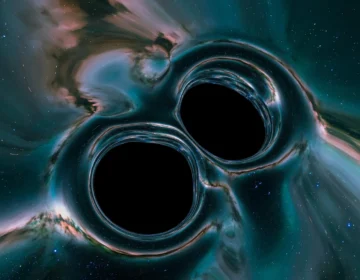
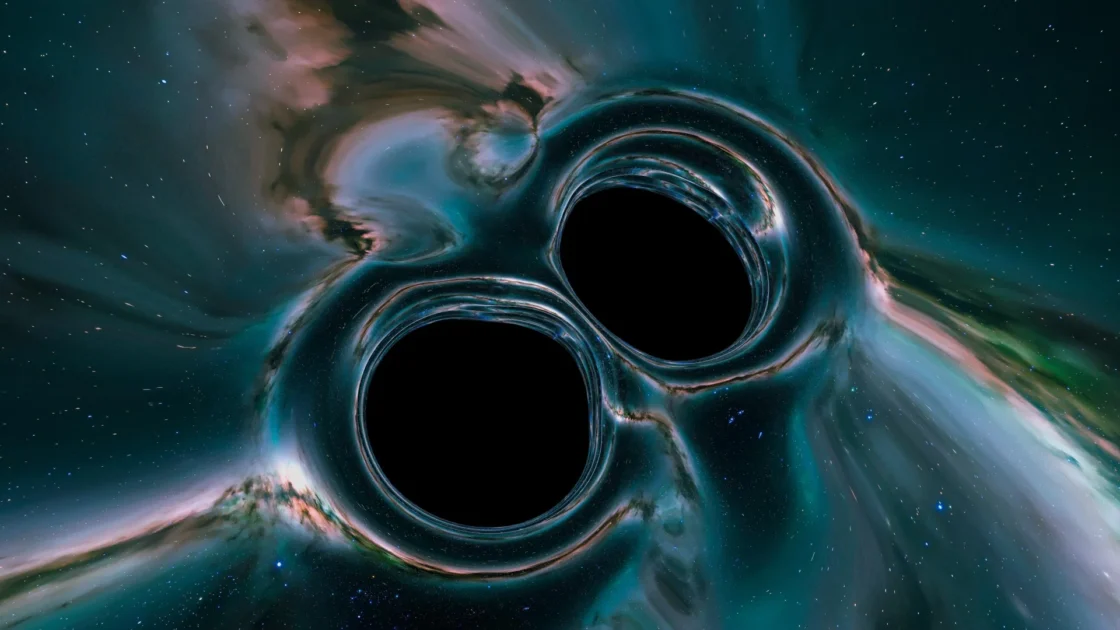
For scientists who follow gravitational waves as they arrive from deep space, GW250114 stands out as an extraordinary event. It is the most precise gravitational wave signal ever captured from a pair of merging black holes, offering researchers a rare chance to closely examine Albert Einstein’s theory of gravity, known as general relativity.
“What’s fantastic is the event is pretty much identical to the first one we observed 10 years ago, GW150914. The reason it’s so much clearer is purely because our detectors have become much more accurate in the past 10 years,” said Cornell physicist Keefe Mitman, a NASA Hubble Postdoctoral Fellow at the Cornell Center for Astrophysics and Planetary Science in the College of Arts and Sciences.
A Global Collaboration Behind the Discovery
Mitman is one of the authors of the study that analyzed this signal, titled “Black Hole Spectroscopy and Tests of General Relativity with GW250114,” which was published in Physical Review . The research was carried out by the LIGO Scientific Collaboration along with the Virgo Collaboration in Italy and the KAGRA Collaboration in Japan. Scientists from Cornell have been deeply involved in the LIGO-VIRGO-KAGRA effort since it began in the early 1990s.
The gravitational wave called GW250114 was produced when two black holes crashed into one another, sending ripples through space-time. That signal reached the U.S.-based Laser Interferometer Gravitational-Wave Observatories (LIGO) on January 14, 2025.