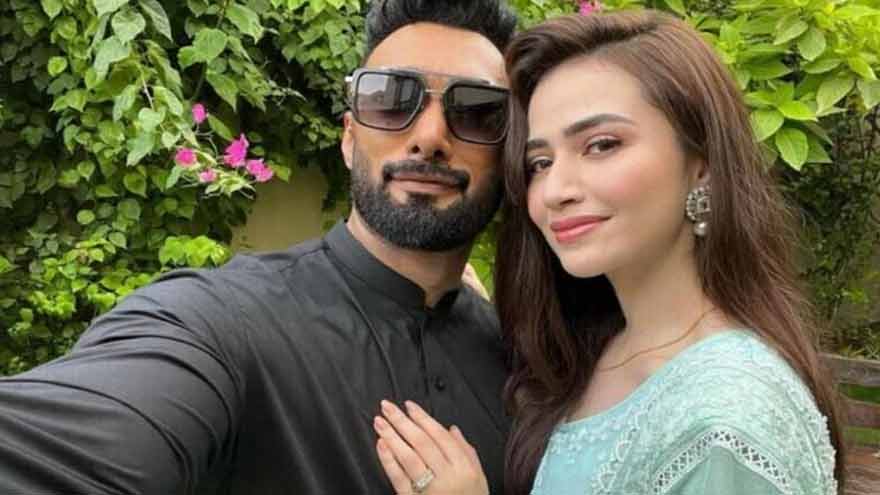
Umair Jaswal is a remarkable Pakistani musician, singer, and actor who is known for his multiple talents, including singing and acting. He has made hit appearances on television, including Coke Studio renditions like Charkha No Lakha and Sammi Meri Waar. Umair Jaswal has also acted in a few projects like Mor Mahal and Yalghaar.
During the COVID-19 lockdown in 2020, Umair Jaswal and Sana Javed got married in an intimate family wedding, after which the couple were seen together at many events.
After a year of silence between the two, Sana Javed and Shoaib Malik announced their wedding in January 2024, which shocked fans because, according to them, they were still married to their respective partners. This sparked cheating allegations against both Shoaib Malik and Sana Javed, which were recently confirmed by Umair Jaswal himself on social media.
Umair Jaswal shared a meaningful quote regarding cheating partners on his official Instagram which says, “Sorry, you can’t hang out with us if you cheat on your partner. This is what we should normalize in 2026.” The quote deeply emphasizes boycotting men and women who cheat on their partners, and Umair Jaswal himself was reportedly a victim of betrayal in a relationship.
Fans are agreeing with his post saying it should be like that, cheating should be condemned on all fronts and that it is unacceptable and people should stand for what’s right and distance themselves with such friend.