
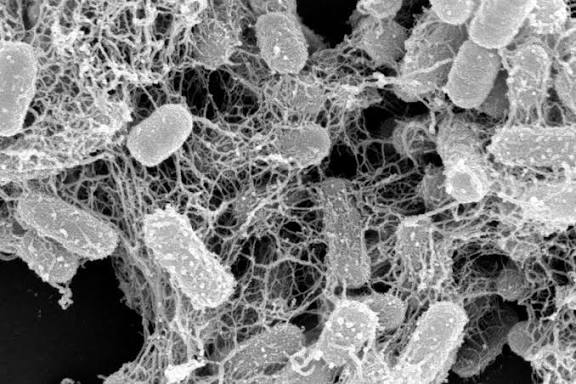
The protein called intelectin-2 plays another important role by reinforcing the protective mucus layer that lines the digestive system.
The body’s mucosal linings contain a range of protective molecules that help stop microbes from triggering inflammation or infection. One important group of these defenders is lectins, which identify microbes and other cells by attaching to sugars on their surfaces.
MIT researchers report that one lectin can act against many types of bacteria in the gastrointestinal (GI) tract. The protein, called intelectin-2, latches onto sugars on bacterial membranes, which helps trap the microbes and slows their growth. It also links together components of mucus, a step that can reinforce the mucus barrier.
“What’s remarkable is that intelectin-2 operates in two complementary ways. It helps stabilize the mucus layer, and if that barrier is compromised, it can directly neutralize or restrain bacteria that begin to escape,” says Laura Kiessling, the Novartis Professor of Chemistry at MIT and the senior author of the study.
Because intelectin-2 appears to work broadly against gut bacteria, the researchers say it could be developed into a therapeutic approach. They also suggest it might be used to bolster the mucus barrier in conditions such as inflammatory bowel disease۔