
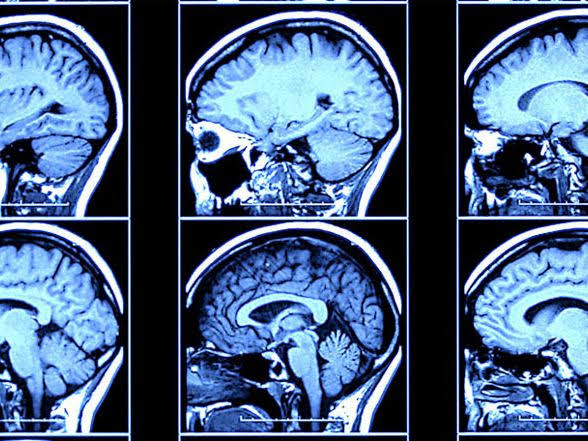
Scientists at the Carney Institute for Brain Science have discovered specific patterns of electrical signals in the brain that may help forecast whether a person will go on to develop Alzheimer’s disease.
Using a specialized tool designed to examine the electrical signals produced by neurons, scientists at Brown University have identified a brain-based marker that may help determine whether mild cognitive impairment is likely to progress into Alzheimer’s disease.
“We’ve detected a pattern in electrical signals of brain activity that predicts which patients are most likely to develop the disease within two and a half years,” said Stephanie Jones, a professor of neuroscience affiliated with Brown’s Carney Institute for Brain Science who co-led the research. “Being able to noninvasively observe a new early marker of Alzheimer’s disease progression in the brain for the first time is a very exciting step.”
The findings were published in Imaging Neuroscience.
In collaboration with researchers at the Complutense University of Madrid in Spain, the team examined brain activity data from 85 individuals diagnosed with mild cognitive impairment. The participants were followed for several years to track how their condition evolved.
Brain activity was recorded using magnetoencephalography, or MEG — a noninvasive technique to record electrical activity in the brain — while participants rested quietly with their eyes closed.