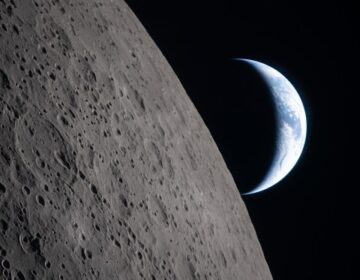

Ancient Australian rocks suggest Earth’s continents formed later than expected and share a common origin with the Moon.
A study of feldspar crystals preserved in Australia’s oldest magmatic rocks is shedding new light on the early evolution of Earth’s mantle and continents, as well as the origins of the Moon.
The research was led by PhD student Matilda Boyce, who worked with scientists from UWA’s School of Earth and Oceans, the University of Bristol, the Geological Survey of Western Australia, and Curtin University. Their findings were published in the journal Nature Communications.
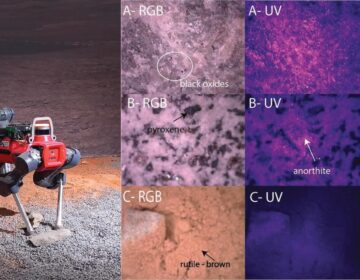
To carry out the study, the team analyzed 3.7-billion-year-old anorthosites from the Murchison region of Western Australia. These rocks are the oldest known on the Australian continent and rank among the most ancient rocks ever identified on Earth.
Tracing mantle history through feldspar
“The timing and rate of early crustal growth on Earth remains contentious due to the scarcity of very ancient rocks,” Ms Boyce said.
“We used fine-scale analytical methods to isolate the fresh areas of plagioclase feldspar crystals, which record the isotopic ’fingerprint’ of the ancient mantle.”