Princeton scientists found that the brain uses reusable “cognitive blocks” to create new behaviors quickly.
Artificial intelligence can now produce acclaimed essays and support medical diagnoses with impressive precision, yet biological brains still outperform machines in one essential area: flexibility. Humans can absorb new information and adapt to unfamiliar situations with very little effort. People can jump into new software, follow a recipe they have never tried before, or learn the rules of a game they have just discovered, while AI systems often struggle to adjust in real time and to learn effectively “on the fly.”
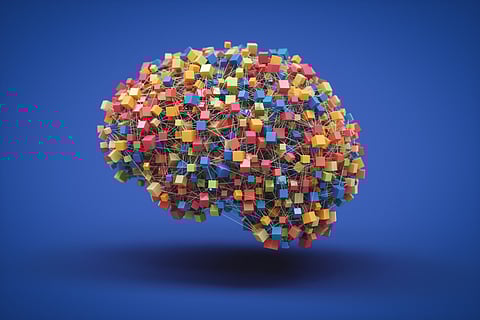
A new study offers insight into why the brain excels at this kind of rapid adjustment. The researchers found that the brain repeatedly draws on the same cognitive “blocks” when performing different types of tasks. By recombining these blocks in new ways, the brain can quickly generate fresh behaviors.
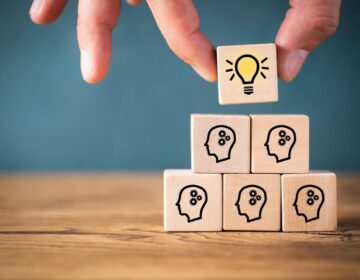
“State-of-the-art AI models can reach human, or even super-human, performance on individual tasks. But they struggle to learn and perform many different tasks,” said Tim Buschman, Ph.D., senior author of the study and associate director of the Princeton Neuroscience Institute. “We found that the brain is flexible because it can reuse components of cognition in many different tasks. By snapping together these ‘cognitive Legos,’ the brain is able to build new tasks.”
Compositionality: Building New Skills from Familiar Ones
People often learn something new by building on related abilities they already have. Someone who knows how to maintain a bicycle, for example, may find motorcycle repair easier to pick up. Scientists refer to this process of assembling new skills from simpler, existing ones as compositionality.