Ancient DNA from Ajvide graves shows Stone Age burials often grouped extended relatives, highlighting the importance of wider kinship networks.
One grave contained a young woman buried beside two small children who were not her own. In another burial, two children were placed together even though they were not siblings and were likely cousins.
A new study by researchers at Uppsala University examined family relationships in four graves belonging to a hunter-gatherer community that lived at Ajvide on the island of Gotland about 5,500 years ago. The genetic findings indicate that people at the site likely recognized and valued family lineage, including connections beyond the immediate household.
Ajvide is considered one of the most significant Stone Age archaeological locations in Scandinavia. The site is known for its well-preserved graves and numerous artifacts. Around 5,500 years ago, hunter-gatherers lived in the area and relied mainly on seal hunting and fishing for food. At that time, agriculture had already spread across much of Europe, but northern hunter-gatherer groups continued their traditional lifestyles and remained genetically different from farming populations.
The burial ground includes 85 known graves. Among them, eight graves contain two or more individuals. To better understand the relationships between those buried together, researchers from Uppsala University analyzed DNA taken from remains found in four of these shared graves.
DNA Study Reveals Extended Family Relationships in Burials
“Surprisingly enough, the analysis showed that many of those who were buried together were second- or third-degree relatives, rather than first-degree relatives – in other words, parent and child or siblings – as is often assumed. This suggests that these people had a good knowledge of their family lineages and that relationships beyond the immediate family played an important role,” says archaeogeneticist Helena Malmström, who was responsible for the design of the study.
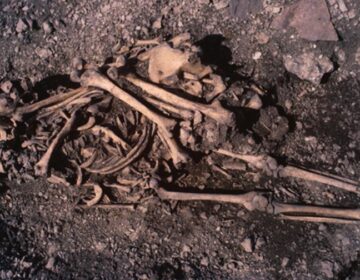
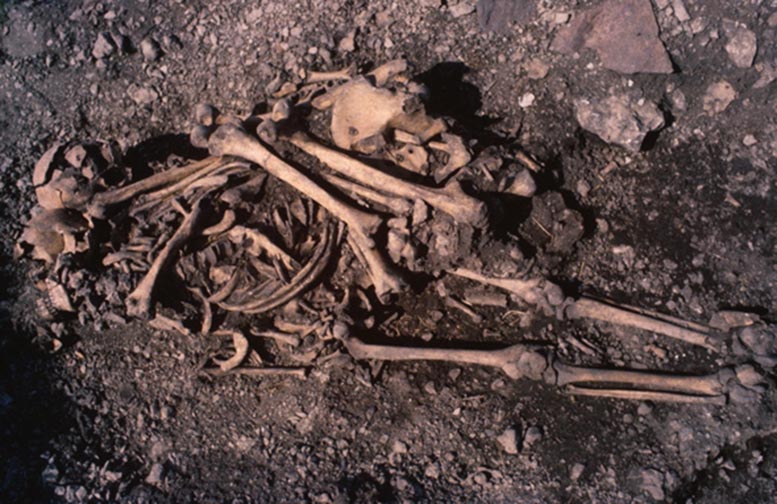
In one grave, archaeologists discovered the remains of a 20-year-old woman lying on her back with two young children placed on either side of her. One child was about four years old and the other about one and a half years old. DNA results indicated that the boy and girl were full siblings, but the woman was not their mother. Genetic evidence indicates she was likely their father’s sister or possibly a half-sister.